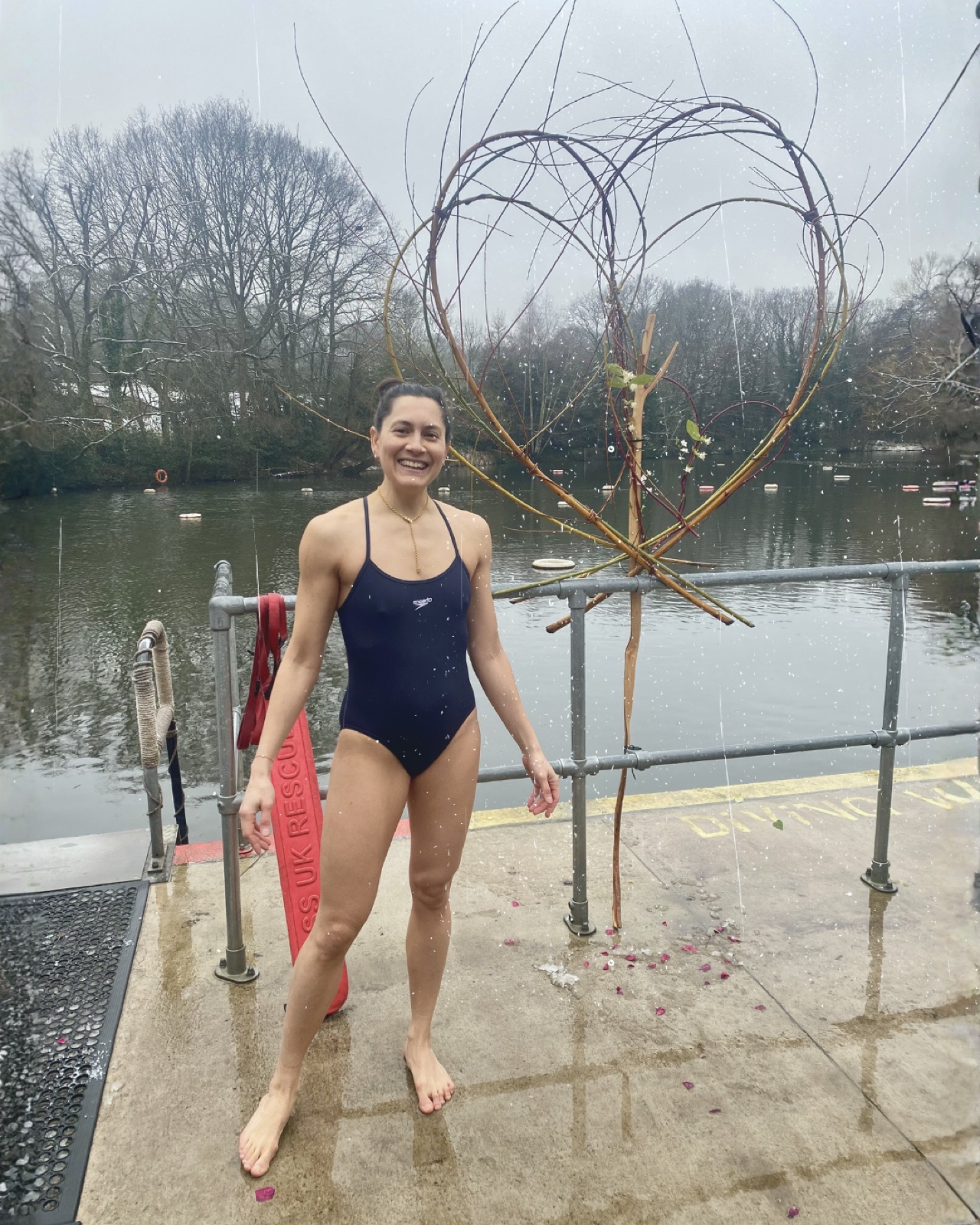
I turn 45 this year.
It feels like a milestone. Especially as a woman.
And yet, I do not feel old — not in my body, not in my mind, not in the way I move through life. In many ways, I feel healthier than I did at 35. Happier, too. More settled in myself. More at home.
So yes, on 27 August, I plan to celebrate properly.
That does not mean I am not thinking about ageing.
Every so often, I wake up and think perhaps I should be more diligent with face yoga. Perhaps I should use my infrared light more consistently. Perhaps I should be doing more. But there is not quite a sense of urgency yet — only the quiet awareness that time is moving, whether I fret about it or not.
What Sinclair got me thinking about
Recently, I found myself deep in a conversation with David Sinclair — or rather, listening to him speak for two and a half hours on the Diary of a CEO podcast with Steven Bartlett. If you are not familiar with Sinclair, he is a Professor of Genetics at Harvard Medical School, the co-director of its Paul F. Glenn Center for Biology of Aging Research, and one of the scientists most seriously dedicated to understanding — and potentially reversing — the ageing process. He is not a wellness influencer. He has spent thirty years in a laboratory, published in Nature, and his book Lifespan became a New York Times bestseller. He is, in short, someone worth listening to.
I then went on to read Lifespan itself. Both gave me a great deal to sit with.
On one hand, the science is astonishing. Research from his lab has shown that certain age-related losses of function can be reversed in mice — including vision loss, through epigenetic reprogramming. That is extraordinary. It suggests that some aspects of ageing may be far more malleable than we once believed.
And yet, even with all of that dazzling science in the background, the advice he offers is remarkably, almost stubbornly, simple. A Buddhist monk could have said it 2,500 years ago.
Do not smoke. Minimise alcohol. Avoid ultra-processed foods. Move your body. Challenge it. Let yourself be a little uncomfortable sometimes. Cultivate meaningful relationships. And eat a little less than modern life encourages us to.
Not because deprivation is virtuous. But because the body seems to benefit from periods of rest from abundance.
That is where fasting comes in.
On fasting, and why I keep coming back to it
Fasting is something I have practised regularly for years. I have used it as a powerful tool to reduce inflammation, support gut healing, maintain a steady weight and body composition, and give my system space to reset. I love it because it is simple, affordable, and adaptable. There are many ways to work with fasting — and it does not have to look extreme to be effective.
You might begin with a gentle overnight fast. You might lengthen the space between dinner and breakfast. You might eventually explore a 24-hour fast, or a seasonal 72-hour practice with the right preparation and support.
There is a methodology to this. And there are nuances.
Women do not tend to respond to fasting in exactly the same way as men. In my view, it is wise to work with your hormonal rhythms rather than against them — even in perimenopause and menopause. Fasting is also not appropriate for everyone. It is not something I would recommend during pregnancy, in recovery, in periods of significant stress, for those who are unwell or undernourished, or for anyone with a history of disordered eating.
But beyond those important caveats, fasting is often far more accessible than people imagine.
It is, in many ways, a competence. The more you practise it, the more familiar it becomes. The less dramatic it feels. The body learns. The mind learns. And often, what first seemed difficult becomes surprisingly natural.
My mother, and the rash that had been there forty years
Age, too, is not necessarily the barrier people assume.
My 70-year-old mother joined the last cohort of The Detox of Becoming, which includes a 72-hour water fast in the deeper track. She had never done one before and understandably felt a little unsure. With attentive support, she moved through those three days beautifully. Afterwards, she felt energised, clear, and deeply encouraged.
Most strikingly: she had carried an itchy skin rash on her nose for forty years. She had tried everything — prescription medication, natural remedies, every topical treatment that presented itself. Nothing had touched it. Three days of water fasting, and it was gone.
That is not a small win in her books.
She is now determined to do a three-day water fast at every equinox, and more if needed.
It is only one anecdote, of course. But it is one close to my heart.
Gentler entry points
For those who feel curious about fasting but have no desire to jump straight into a water fast, there are softer ways in.
One that has been spoken about more recently is the sardine fast, a protocol coined by Dr Dominic D’Agostino, a researcher in metabolic therapies and nutritional ketosis at the University of South Florida. The basic idea is simple: for a short period, usually a few days, you eat only sardines. It is not the same as a water fast, and I would not present it as equivalent. But it may help some people move into ketosis, stabilise appetite, and experience something of the metabolic simplicity of fasting without the same degree of stress or hunger. He explains the thinking on The Primal Podcast, and the conversation is well worth your time.
What I appreciate about approaches like this is that they widen the doorway.
They remind us that this work does not have to be all or nothing. We do not need to prove anything. We do not need intensity for intensity’s sake. We need an approach that works with our physiology, our season of life, and our actual capacity.
The quieter question
And perhaps that is what interests me most in the longevity conversation.
Not the fantasy of living forever. Not the transhumanist promise of never ageing, never declining, never dying. But the much quieter and more immediate question of how we live well now.
How we reduce the burden on the body. How we support repair. How we give our cells, our metabolism, our nervous system the conditions in which they can do what they were designed to do.
Because yes, there may well come a day when anti-ageing medicine becomes more powerful than we can currently imagine. But we are not there yet. And even if we were, I am not convinced the deepest human question would disappear. We would still need to ask: what is health for? What is vitality for? What is a long life in service of?
For now, I remain interested in the old-fashioned things.
Rhythm. Restraint. Nourishment. Challenge. Love. Rest. And the quiet intelligence of the body, when we stop overwhelming it.
If fasting has been on your mind, perhaps this is your invitation to begin — gently, without force, without ideology. With curiosity.
Further listening & reading
- David Sinclair on the Diary of a CEO — the conversation that prompted this letter
- David Sinclair — Lifespan: Why We Age and Why We Don’t Have To
- Dr Dominic D’Agostino on sardine fasting — The Primal Podcast
- Dr Jason Fung — for fasting in the context of weight and metabolic health
- Dr Mindy Pelz — Fast Like a Girl, for a more cycle-aware lens
Everything in this letter — fasting, cellular repair, the body’s capacity to reset — points toward the same underlying truth: the body has remarkable intelligence when we stop overwhelming it and start supporting it instead.
If you are feeling that pull toward lighter digestion, clearer skin, steadier energy, a nervous system that feels less like it is running on borrowed time, Radiance Reset was built for exactly this moment: a personalised twelve-week programme across gut repair, inflammation, metabolism, and nervous system regulation — not as separate targets, but as an integrated whole. Fasting, where appropriate, is one of the tools we use. So are nourishment, rhythm, and the kind of intelligent support that knows when to push and when to allow.
We begin with a free 20-minute discovery call. In person in London, or online.