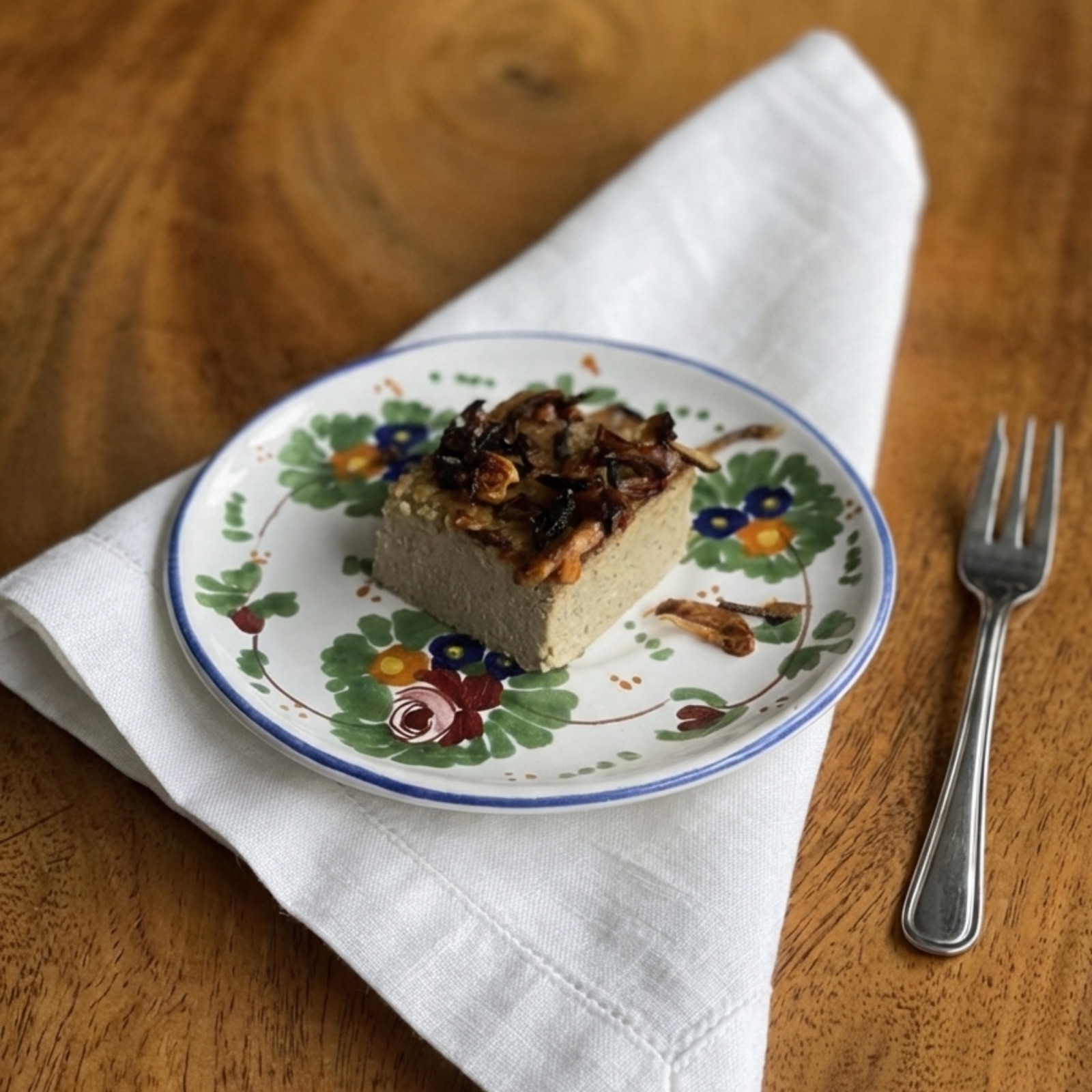
Prep: 25 minutes · Cook: 40 minutes · Total: approx. 1 hour 5 minutes
Serves:
16 small squares
Ingredients
Custard base
- 200 g / 1 cup cooked mung beans
- 200 ml / ¾ cup + 1 Tbsp coconut whipping cream
- 2 large egg
- 50 g / ⅓ cup palm sugar or coconut sugar, finely chopped
- 1 Tbsp rice malt syrup or molasses
- ½ tsp sea salt
- ½ tsp pandan extract or vanilla (optional)
Topping
- 1½ Tbsp finely sliced shallots
- 1 tsp sesame oil or a small amount of neutral oil
Method
- Preheat the oven to 165°C / 325°F.
- Blend the cooked mung beans with the coconut milk until completely smooth.
- Add the eggs, sugar, rice malt syrup, salt, and pandan or vanilla.
- Blend gently, then strain through a fine sieve to achieve a smooth custard.
- Pour into a lightly oiled shallow baking dish (approx. 20 × 20 cm / 8 × 8 inch).
- Bake uncovered for 35 to 40 minutes, until just set with a lightly golden surface.
- While the custard bakes, gently sauté the shallots in sesame or neutral oil over low heat until soft and lightly caramelised, not crispy.
- Allow the custard to cool completely before slicing and topping with the shallots.
I grew up with the flavours of coconut. In Thai food, sweetness is rarely sweet alone. It almost always meets something savoury, fragrant, or salty to create depth and balance.
This dessert carries that memory for me, gently reworked through a more nourishing lens. The sweetness of palm sugar melts into coconut custard, while the fragrance of fried shallots brings a savoury note that is unmistakably Thai. Their soft crunch contrasts with the yielding, melt-in-the-mouth texture of the custard.
It’s an explosion of taste and texture. Comforting, surprising, and deeply familiar, yet a little lighter and more supportive than the traditional version.
Yin–yang balance
The cooling yin qualities of coconut milk, natural sweetness, and soft custard texture are balanced by the grounding yang of mung beans, baking, salt, and savoury shallots. Overall, this is a centred, gently grounding dessert, suitable occasionally even in cooler seasons when eaten mindfully.
Nutrition facts
- Energy:
- 115 kcal
- Protein:
- 4 g
- Fat:
- 7 g
- Carbohydrates:
- 10 g
- of which sugars:
- approx. 4 g
Rich in: B vitamins, folate, magnesium, potassium, and fibre
Notes & variations
- Pandan offers the most traditional flavour; vanilla gives a gentler, familiar note.
- Best enjoyed in small portions, at room temperature, to support digestion.
- Keeps well for up to 3 days in an airtight container in the fridge.
- Pairs well with bancha, genmaicha, or roasted barley tea