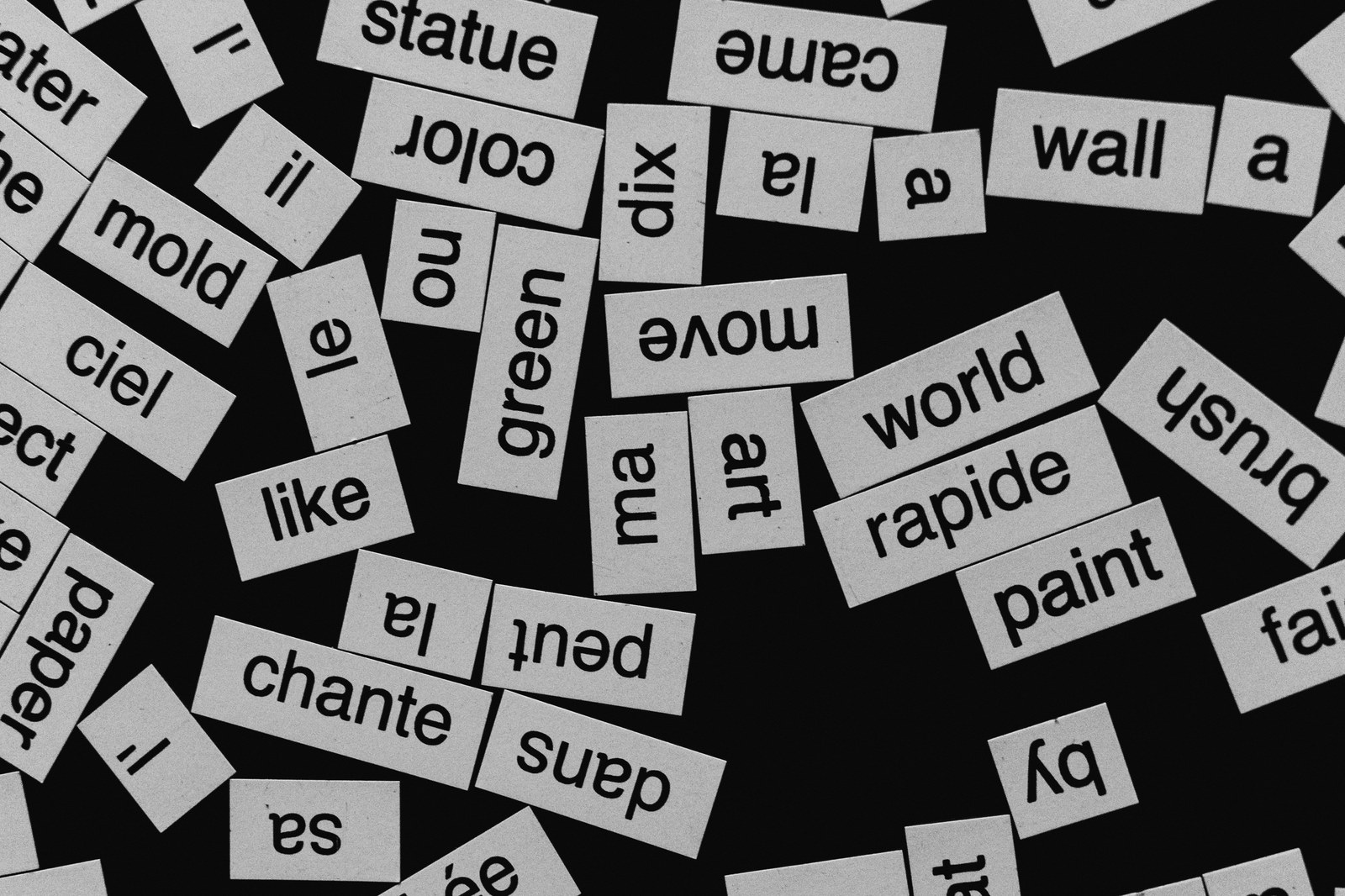
I banned words the way some people ban foods.
Not only from my dinner table, but also and especially from the inside of my head. Here is the list, so you know exactly what I mean. My favourites: Idiot. Dumb. Useless. Awful, as in you’re an awful mum. Bitch, as in you’re such a bitch for snapping like that. And judgemental, a word I used mostly to judge myself for being judgemental. That one still makes me giggle. What are yours?
What has a list of words got to do with your health? Everything. Sentences like these, repeated all day, are a low-grade chronic stress, and stress is cumulative: added to everything else your day carries, emotional or physical, they help keep your nervous system stuck in survival mode. And a body held there struggles to heal. Its sleep lightens, its moods and hormones drift, and the list goes on. The science comes further down. But first, the different ways negative self-talk is experienced because, let’s be honest, we all do this even if we aren’t conscious of it.
The people who feel instead of hear
There is something I rarely hear anyone talk about: some people don’t hear these words. They don’t have a running commentary in their heads. They might see the words as if written. Others hear them. I ‘feel’ them. A drop in the chest when a piece of work misses a deadline. A knot in the stomach after I’ve spoken to my daughter in exactly the way I’d promised myself I wouldn’t. For years I thought this meant I didn’t have negative self-talk. I just had ‘moods’.
But sit with one of those feelings and ask what it would say if it could speak, and it turns out it has a script. The heavy chest: you failed, and if things don’t work out it will be your fault, and you will have deserved it. The knot in the stomach: that’s not what a conscious parent does, sort yourself out. I was communicating these things to myself all day. It just didn’t come through words.
Your body is listening
Why does a naturopath care about this? Because your body listens even when you don’t. In a trial published in the New England Journal of Medicine, people who had stopped a cholesterol medicine because of side effects took the real drug, a placebo, or nothing at all, a month at a time over a year, in an order they could not predict. Ninety per cent of the symptom burden they felt on the drug appeared on the placebo too. The expectation of harm produced the harm. Brain imaging tells the same story from another angle: words associated with pain activate the regions that process pain itself. And how you describe your illness to yourself predicts your recovery better than the severity alone would.
Every word on my list is an I-am sentence
Psychologists draw a useful line between guilt (I did a bad thing) and shame (I am a bad thing). Guilt about a behaviour can sometimes change the behaviour. Shame changes you: it is the feeling most tied to hiding, and to reaching again for the very thing we are ashamed of. Read my banned list again. Every word on it is an I-am sentence. It was a shame list.
And because food is my territory, here’s a relevant study about chocolate cake. People who mostly associated it with guilt were less successful with their weight management over the following eighteen months than people who associated it with celebration. The guilt did not make them disciplined. It made things worse.
What I say instead
Not affirmations I don’t believe; I don’t know how to lie. When someone asks how I am and things are rough, I don’t perform brightness, but I choose to not recite the hardship either. I say it has not been easy, then I tell them about something good that is also true, and I let that be the last word. Instead of I’m unwell, I say I’m healing, because both are true and only one of them points somewhere more hopeful. A mistake is no longer dumb; it is tuition: I’m learning. And you’re an awful mum has become: I didn’t do that perfectly, I did the best I could, and it was enough. I even swear less than I used to. Not out of preciousness. I keep noticing what those words leave behind in the room they are spoken in, even when the room is my own head.
The toxins no liver can clear
We call something a toxin when it’s a harmful substance. By that definition, “you’re useless” qualifies. A body under constant judgement is a body braced, and a braced body digests poorly and holds on to what it should be releasing. This is why I have come to think of this work as a detox in its own right, the mental kind, and why no clearing of the body ever quite holds without it. The liver was never the only organ that needs to let go.
And this reaches beyond the body. Tell yourself often enough that you are a failure, and you are more likely to fail; expectation shapes behaviour just as surely as it wrote those symptoms onto a placebo. The same sentences that stand in the way of healing stand in the way of everything else you want. That is why, to me, detoxing the mind is foundational, to good health first, and then to a good life. And that is why I banned those words: to heal my entire life.
If this letter names something you recognise, the Detox of Becoming is where Sandrine Fuentes, the hypnotherapist and mindset coach I work with, and I do this work properly, and you are welcome to get in touch to discuss whether it is right for you.
And if you would like these letters as they are written, with the monthly practice and recipe that go with them, you can subscribe to Staying au Fay.