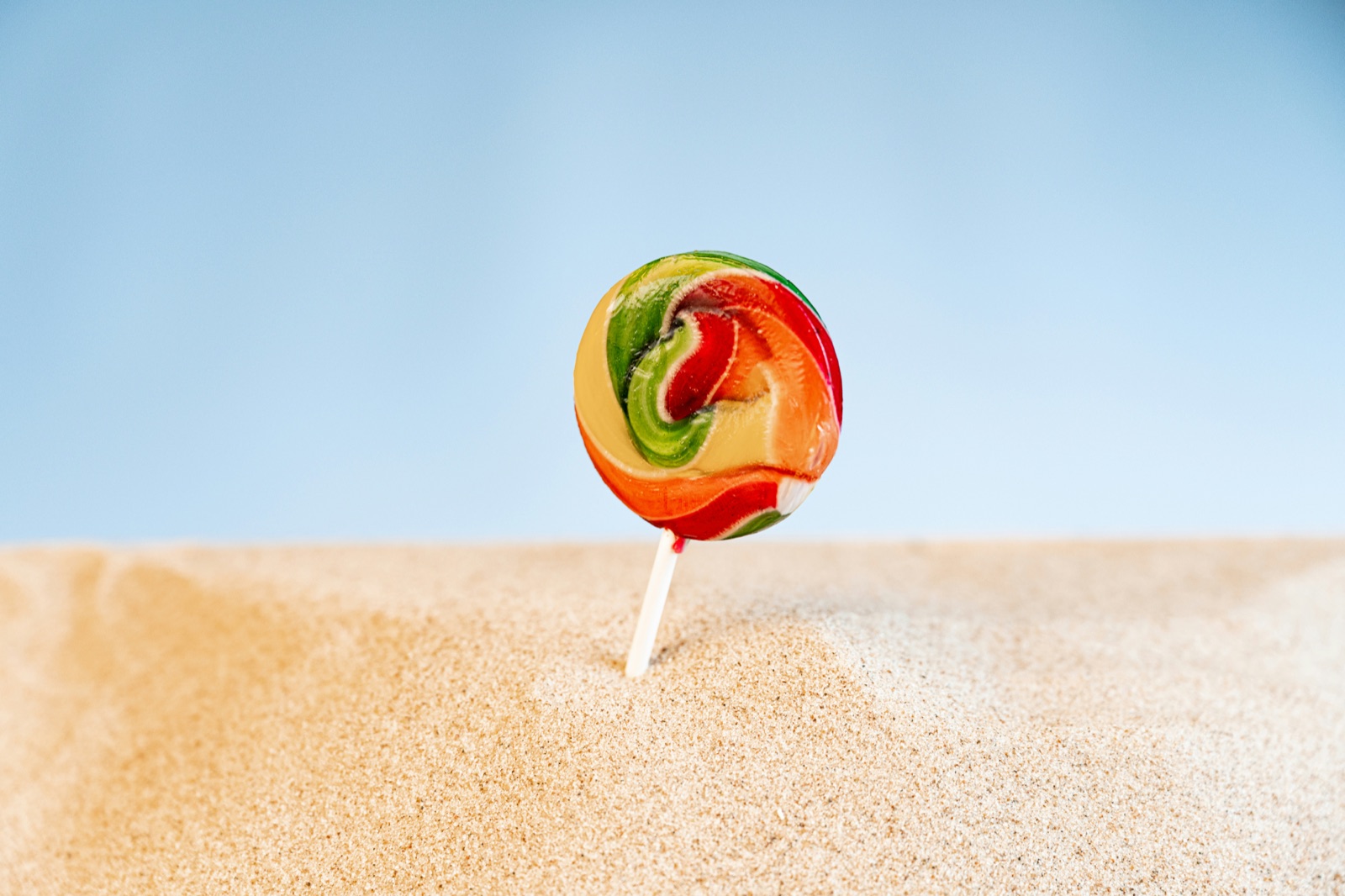
Last weekend at the playground, my five-year-old daughter spotted a few children licking on a bright, psychedelic rainbow lollipop. She gasped, “Mama, look! They’re eating a lollipop!”
They were… joyfully, innocently… and their parents looked just as cherubic. I felt a wave of empathy (they don’t know…) and braced myself for what I thought was an inevitable tantrum. Surely, Luna would demand one too. But instead, she turned to me and whispered, wide-eyed, “It’s poison! Should I tell them?!”
Her words hit me with a mix of surprise, pride, and mild panic. My little truth warrior was ready to save the day. And embarrass me in the process. Thankfully, I managed to dissuade her, and after a moment she smiled and said, “We can go home and make a healthy version later!” Crisis averted.
I sat back on the bench, feeling relieved, humbled, and quietly grateful. Luna was getting it — not just intellectually, but in her body too. There was no sugar craving, no meltdown, just a child happily swinging and climbing, getting her dopamine fix the natural way. Earlier that morning, we’d cycled to the playground on the road, and she’d radiated pure excitement and pride: another burst of dopamine, this time earned through mastering a new skill, not sweets.
Sometimes I wonder if I go too far calling sugar a poison and using that language with her. But I’m not alone in waking up to the damage it causes, not just to individuals, but to our collective health and happiness. And if this little playground moment is any proof, the message has landed.
On Monday morning, Luna woke up fresh, energised, and joyful. She’d had a weekend full of the essentials: exercise, outdoor play, colourful whole foods, minimal sugar, deep sleep, Epsom salt baths, evening stories, limited screen time, social and family connection. Her godfather even noted how bright and calm she was, and I thought, yes, this is the formula — even for children!
Balanced nutrition. Restful sleep. Genuine connection. No overstimulation whether from food, screens, or over-scheduling. We don’t manage all of it every week, but when we do, the results speak for themselves.
These days, Luna eats cucumber salad for breakfast (and licks the leftover soy sauce!), lets me brush her teeth without resistance, and knows that no veggies means no dessert. And sometimes, she chooses that path calmly. No drama. Just balance.
It’s not always perfect, and it doesn’t need to be. But it’s deeply encouraging to see that consistency builds ease, and that children truly can learn to thrive without constant sugar hits. And so can we!
If you’d like to understand more of the science behind this, I highly recommend this interview with Dr Robert Lustig, a brilliant reminder that reducing sugar and processed foods isn’t about deprivation, but about reclaiming freedom: the freedom to feel well, love deeply, and live with genuine happiness.
Yes, it’s bloody hard. And absolutely worth it. My favourite ways to increase dopamine and feel deeply satisfied are learning new things (often through podcasts and audiobooks), swimming in the pond all year round (bring on cold water therapy!), and doing creative work (experimenting with recipes and health protocols, or designing new programmes). I also reset my dopamine receptors regularly through mindfulness, fasting, and caffeine breaks.
If you’re working to overcome sugar (or any addiction) start by knowing what brings you true satisfaction, and do more of that. The more content we are, the easier it becomes to let go of what numbs us. There’s no magic bullet, just practice one honest, loving step at a time.
We don’t have to be perfect parents or perfect eaters. We just need to keep showing what joy looks like when it’s real, not manufactured by sugar, screens, or spending, but earned through living fully.